Are counselling and psychotherapy practices safe for face to face work after the pandemic?

Written by
Adam Kincel, PhD
UKCP Accredited Psychotherapist
Adam Kincel is the founder of Kensington Counselling Rooms and Pimlico Counsellors and Psychotherapists. He used to work as a team leader in supported housing keeping both people and properties safe.
Date updated: 07.08.25
Where feeling goes when we ignore it
The current pandemic has impacted various areas of our lives including how and where we access counselling. Although initially, the majority of sessions moved to the online domain, clients and therapists are more often considering restarting face to face sessions. This guide is an outcome of a study that Kensington Counselling Rooms along with Pimlico Counsellors and Psychotherapists did to ensure our practices offer the highest standard of virus control.
In preparation, we have reviewed the governmental requirements, Counselling and Psychotherapy Union guidelines, undertaken the coronavirus risk assessment, and spoken to our colleagues in Italy and Poland that are already working face to face.
Also from our practitioners
 What is cognitive behavioural hypnotherapy and how can it help?
We are confident that following these guidelines, the risk of passing the coronavirus in the counselling practices will be low. However, there are specific steps that each private practice needs to take to enable working in the same physical space. Please check with the practice management if there is a coronavirus risk assessment in place. Even though the infection may be minimised within the counselling practice, a higher risk may appear on the way to get there. Clients and counsellors should consider their own safety before deciding to work face to face.
The government has not explicitly prohibited offering face to face therapy, and in fact, some of the most emotionally vulnerable clients were seen face to face during the lockdown. Even though most of the shops and hair salons are now operational, each therapist and client will need to make an individual decision based on the risk. Therapists and clients who are in more vulnerable groups or who cannot easily access the practice may carry on working online for longer.
To make sure that a private practice is ready for working offline, it needs to have rigorous procedures in place including a specific cleaning schedule.
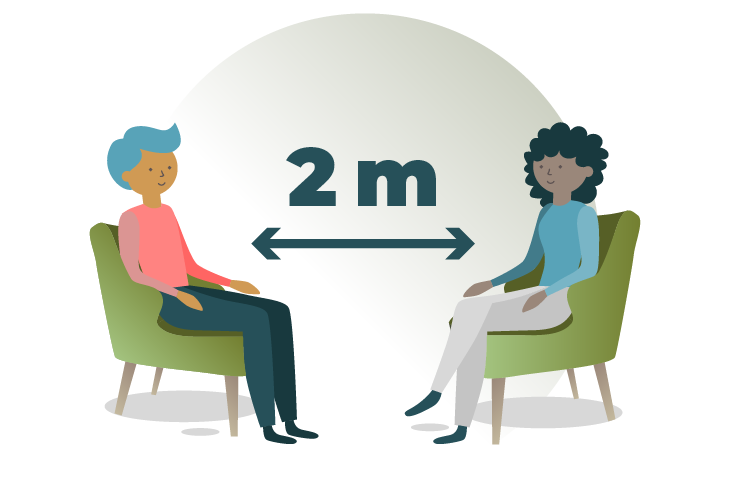
Each counselling practice will have to go through a rigorous assessment of what needs to be changed to enable safer working during the epidemic.
Below are the most frequent considerations:
Implementing the above steps require consultations and training. Each counsellor and staff working at the practice must be aware and have agreed to these changes. With the influx of counselling clients that are expected after the coronavirus pandemic, counselling and psychotherapy practices must have procedures in place to minimise the possibility of infections.
If you are looking for a counselling room to rent that is coronavirus ready, please find more info here.